What is Japan's HSP Visa? The Fast Track to Living in Japan
Japan is facing something it has never dealt with before: a serious labor shortage. With a population that's been shrinking since 2008 and a birthrate hitting record lows, the country is rolling out the red carpet for skilled foreign professionals like never before. In 2023 alone, Japan's foreign workforce crossed the 2-million mark for the first time in history — and the government is actively working to attract even more talent.
Enter the Highly Skilled Professional (HSP) visa — arguably the best immigration deal Japan has ever offered.
So, What Exactly is the HSP Visa?
Think of it as Japan's "VIP lane" for immigration. Instead of going through the typical visa process and waiting 10 years to apply for permanent residency, the HSP visa uses a points-based system to fast-track qualified professionals.
Here's the deal: if you score 70 points or more, you get HSP status. Hit 80 points, and you're eligible for permanent residency in just one year. Yes, one year — while everyone else on a regular work visa is looking at a decade-long wait.
The system was introduced by Japan's Immigration Services Agency, and it's been growing in popularity every year. With Japan launching new programs like the J-Skip and J-Find visas in 2023 to complement the HSP pathway, it's clear the country is betting big on global talent.
How the Points System Works
The HSP points system scores you across several categories. It's surprisingly straightforward once you break it down:
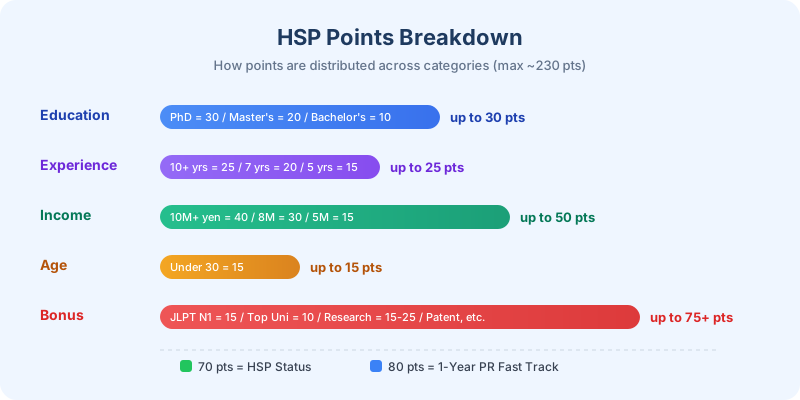
Let's walk through each one:
-
Education (up to 30 pts) — A PhD gets you 30 points, a Master's degree 20, and a Bachelor's 10. If your degree is from a top-ranked university, you get bonus points on top of that.
-
Work Experience (up to 25 pts) — The more years you've worked in your field, the better. 10+ years gets you the maximum.
-
Annual Income (up to 50 pts) — This is often the biggest single factor. Higher salary = more points. The thresholds start at ¥3,000,000 and go up from there.
-
Age (up to 15 pts) — Younger applicants score higher here. Under 30 gets the maximum 15 points, with the bonus decreasing as you get older.
-
Bonus Factors (75+ pts possible) — This is where things get interesting. You can rack up serious points from things like:
- Japanese language ability (JLPT N1 = 15 pts, N2 = 10 pts)
- Graduating from a top global university
- Research achievements and patents
- Working at a company that receives government innovation support
- Having a qualification in your field
Most people are surprised to find they're closer to 70 points than they thought. A 32-year-old software engineer with a Master's degree, 5 years of experience, earning ¥8 million, with JLPT N2? That's already around 75 points.
Why Everyone's Talking About HSP Benefits
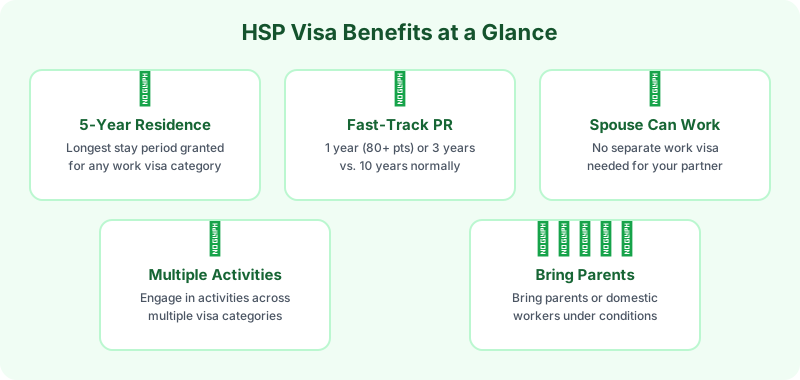
The benefits are genuinely impressive — and they go way beyond just a longer visa:
1. Permanent Residency Fast Track
This is the headline benefit. Normally, you need 10 continuous years in Japan to apply for PR. With HSP:
- 80+ points → PR in 1 year
- 70+ points → PR in 3 years
That's a game-changer for anyone planning a long-term future in Japan.
2. Five-Year Residence Period
While most work visas grant 1 or 3 years, HSP holders get 5 years right away. Less paperwork, less stress about renewals.
3. Your Spouse Can Work Freely
On a regular dependent visa, your spouse is limited to 28 hours per week. With HSP status, your spouse gets full work permission — no restrictions, no separate application needed.
4. Multiple Work Activities
Regular work visas lock you into a specific activity. The HSP visa lets you engage in activities that span multiple visa categories. Teaching on the side while working as an engineer? No problem.
5. Bring Your Parents (Conditionally)
Under specific conditions (like having a child under 7 or being pregnant), HSP holders can bring their parents to Japan. This is virtually impossible with any other visa type.
The Path to Permanent Residency — Visualized
Here's what the timeline looks like compared to a regular work visa:
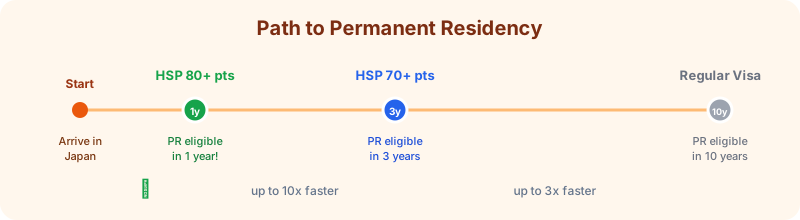
The difference is dramatic. While colleagues on regular work visas are still years away from PR eligibility, HSP holders with 80+ points can apply after just 12 months.
Who Should Consider HSP?
The HSP visa covers three main categories of professionals:
- Researchers & Academics — University professors, research scientists, postdocs
- Engineers & Specialists — Software developers, IT professionals, designers, consultants
- Business Leaders — Executives, directors, startup founders
If you're working in tech, finance, academia, or management — and especially if you have a graduate degree and some Japanese language skills — there's a good chance you qualify.
What's Changed Recently?
Japan's approach to skilled immigration has been evolving fast:
- J-Skip Visa (2023): A new pathway for high-income professionals (¥20M+) and advanced degree holders to bypass the points system entirely
- J-Find Visa (2023): Allows graduates of top universities to come to Japan for job hunting
- Digital Nomad Visa (2024): A 6-month stay for remote workers earning over ¥10M annually
- Record Foreign Workforce: Japan's foreign worker population exceeded 2 million for the first time in 2023, signaling a major shift in immigration openness
These moves show Japan is serious about competing globally for talent. The HSP visa remains the most established and beneficial pathway for skilled professionals.
Ready to Check Your Score?
The best part? You don't have to guess. Our free evaluation tool calculates your HSP points in minutes — just plug in your background and see where you stand.
Many people are surprised to find they already qualify, or that they're just a few points away. A Japanese language certification or a qualifying bonus factor could be all you need to cross the 70-point threshold.